On 30 July 2025, Nature Yetu held its debut session of the In Focus webinar series. This series is designed to spark meaningful conversations around conservation issues, encourage critical thinking, and inspire participants to explore new ideas and solutions.
The speakers
The Hot Seat question
Following an introduction on Nature Yetu, each speaker was asked a question by the moderator, Fabiola Monty, to set the scene for their respective intervention.
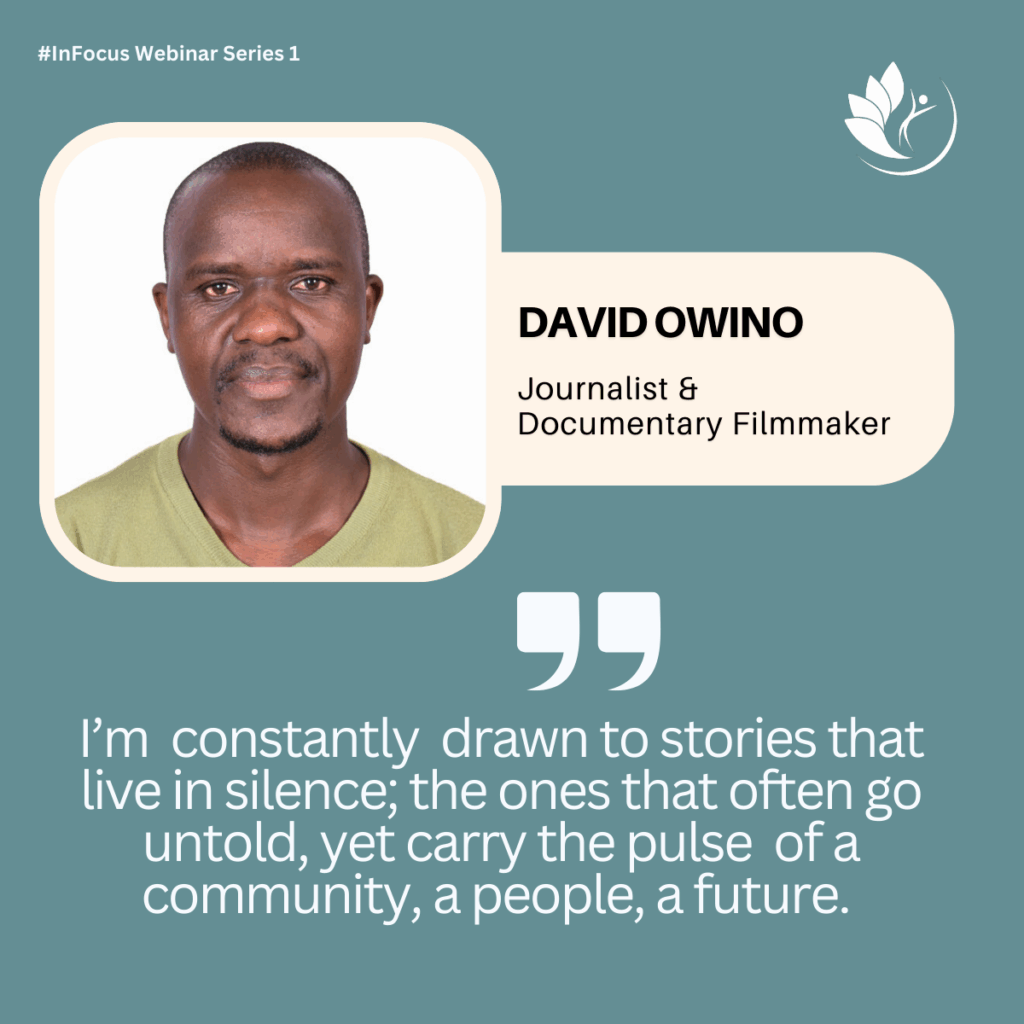
Question to David Owino :
“We first met at a regional platform on disaster risk reduction, where I was pitching nature-based solutions stories for the NGO I represented. During our conversation, one thing stood out to me. One was your advice to always ask the question: “So what?” when telling a story. Could you unpack what you meant by that? And more broadly, how can asking this question help environmental professionals frame their work in ways that resonate more effectively with journalists, and ultimately, with the public?“

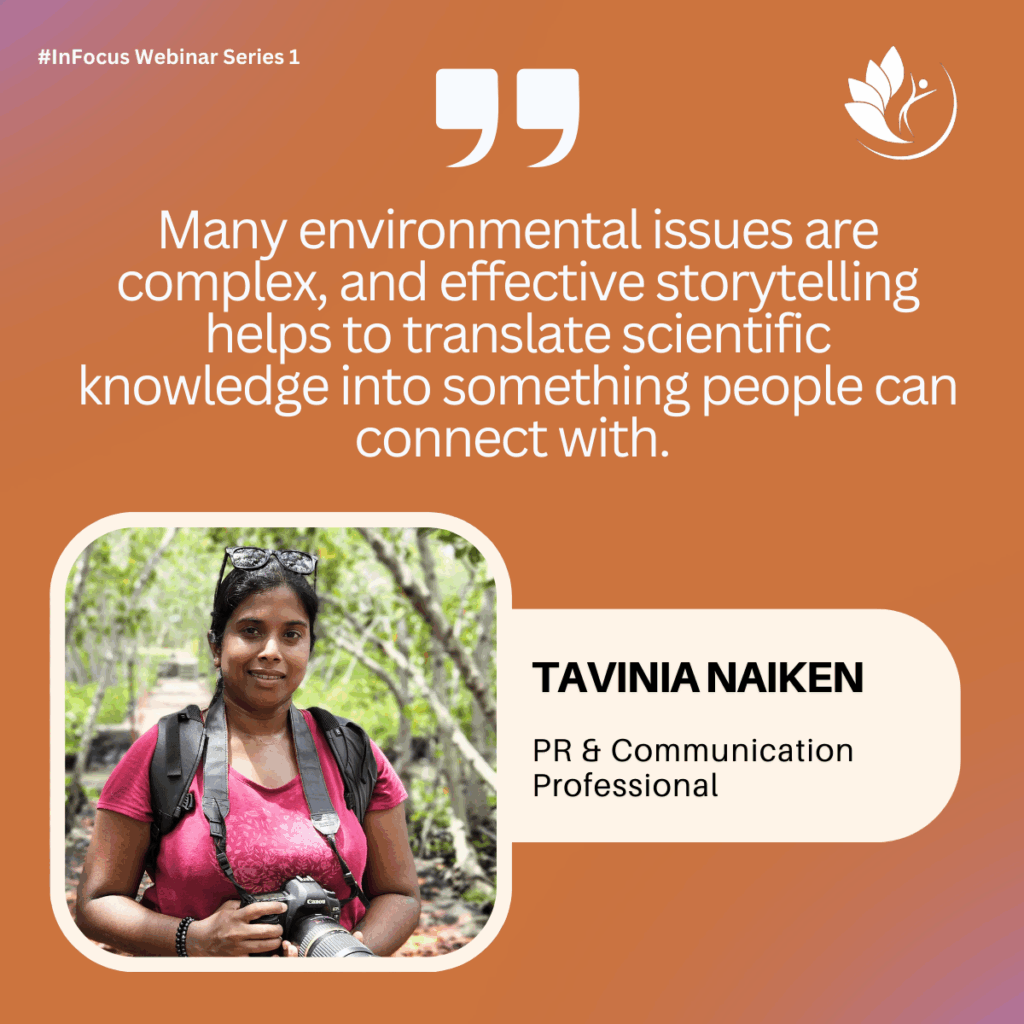
Question to Tavinia Naiken :
“We recently featured you on Nature Yetu’s blog, where you emphasized the importance of effective storytelling in bridging the gap between science and the public. Given your background—not only in communication but also in the environmental humanities, how do you view this gap in Mauritius? And in your view, is this gap bridgeable?“
Getting to the heart of the matter
With her presentation “Reclaiming the narrative: Ecological storytelling and post-colonial belonging in Mauritius”, Tavinia brought important take-home messages when it comes to storytelling within post-colonial contexts like Mauritius, reminding us that storytelling can be a tool for healing and a tool of belonging. “The most powerful environmental narrative will be those that are self-aware, historically grounded, and emotionally open, inviting others into a shared future and not just a rehearsed past.”
Building on Tavinia’s presentation, David delivered a compelling message: “Science will never matter until it is about people.” Drawing from the stories he has worked on, he emphasised the importance of framing environmental issues through the lens of human experience, highlighting how storytelling becomes most powerful when it centers on people.